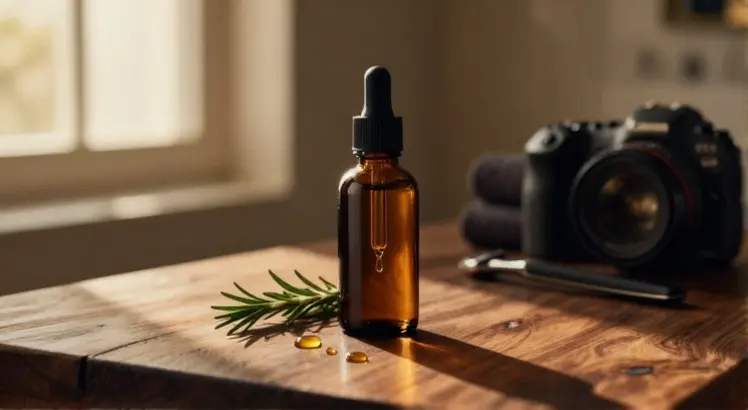

You have invested in a high-quality bottle of L-ascorbic acid, but you might be staring at it wondering if you are using it wrong. Timing is not just a minor detail; it is the difference between glowing, protected skin and a product that simply evaporates before doing its job. For men, the challenge is unique because your skin is thicker, oilier, and often subjected to the trauma of daily shaving.
Understanding the best time to use vitamin c serum for men ensures you maximize collagen synthesis and fight oxidative stress without irritating your freshly shaved face. We are breaking down the science of AM versus PM application, layering, and how to sync your skincare with your razor.
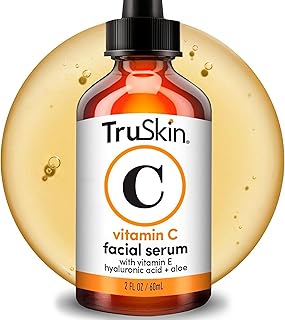
TruSkin Vitamin C Serum for Face
Check PriceWhy Timing Matters More Than You Think
Vitamin C is not a gentle, passive moisturizer; it is a potent active ingredient. Its primary job is to neutralize free radicals and act as an electron donor to prevent environmental damage. However, its molecular structure is notoriously unstable.
When you apply it at the wrong time or in the wrong order, it can oxidize on your skin before it penetrates, rendering it useless. For men who often simplify their routine to a single slap it on and go step, getting the timing right means the difference between a faded dark spot and a stubborn mark that sticks around for months.
AM vs. PM: Decoding the Ideal Window
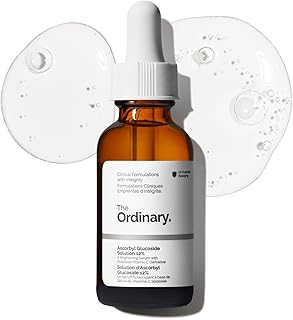
The Ordinary Ascorbyl Glucoside Solution 12%
Check PriceThe debate between morning and evening application is intense, but the data heavily favors one specific time slot for the primary dose. Let’s break down the biological logic.
The Case for Morning Application (The Winner)
La Roche-Posay Pure 12% Vitamin C Serum
Check PriceFor 90% of men, the best time to use vitamin c serum for men is immediately after your morning face wash. Your skin faces a daily onslaught from UV radiation, blue light from screens, and pollution from your commute. Vitamin C acts as a sacrificial antioxidant. By applying it in the morning, you create a reservoir of protection that sits in the skin for up to 72 hours, but it is most potent during the first 8 to 12 hours of daylight exposure.
Think of it as your invisible hard hat. If you apply it at night, you are wasting its protective superpower because you are sleeping in a dark room with minimal oxidative stress. Morning application also synergizes perfectly with your sunscreen. Vitamin C boosts the effectiveness of SPF, making it a non-negotiable morning duo.
The Nighttime Theory (Repair Mode)
Some dermatologists suggest using vitamin C at night to avoid the slight acidic tingling during the day. However, this is not the primary, optimal time. Your body’s natural repair mechanisms peak while you sleep, driven by human growth hormone. While vitamin C does aid in collagen production, its exfoliating effect is not as strong as retinoids or acids.
If you have extremely sensitive skin or you are using a high-percentage L-ascorbic acid that stings badly, you can shift it to PM. But you will miss out on the daylight defense shield. The ideal, non-negotiable rule for men who want anti-aging results is to stay with the morning.
How to Integrate Vitamin C Into a Male Skincare Routine
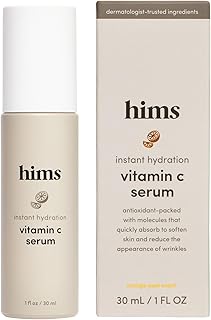
him Vitamin C Serum for Face
Check PriceMen’s skin has a higher density of collagen and a tougher stratum corneum due to testosterone. However, shaving creates micro-cuts that compromise the barrier. You cannot simply throw a serum on a bleeding face. You need a tactical sequence.
The Post-Shave Rule for the Perfect Window
You have a golden window of about 10 to 15 minutes after shaving. Immediately after a shave, your pores are open, but your nerves are raw. Applying an acidic vitamin C serum right away can cause a burning sensation and excessive redness. Your skin needs to rebalance its pH first.
Follow this precise, non-negotiable order:
- Step 1: Rinse with Cold Water. Hot water exacerbates inflammation. Cold water closes the capillaries slightly and calms the surface nerves.
- Step 2: Wait 5-10 Minutes. Let the skin air dry or pat it gently with a clean towel. Do not rub. During this time, the skin’s pH naturally starts to drop from an irritated alkaline state back to its normal acidic state.
- Step 3: Apply a Light, Alcohol-Free Toner or Mist. This primes the skin. Wet skin is 8 times more permeable than dry skin. You want a damp canvas for the serum.
- Step 4: Dispense the Vitamin C Serum. Use 3 to 4 drops for the entire face and neck.
- Step 5: Seal Immediately. Wait about 60 seconds for it to dry, then lock it in with a moisturizer containing squalane or ceramides.
The Layering Order: Avoiding Pilling and Inactivation
Men often complain about their skincare pilling into little balls or rolling off their face. This happens when you mix incompatible bases or don’t respect drying times. Vitamin C serums are usually water-based and thin. The rule is thinnest to thickest. Never apply an oil or a thick cream before your vitamin C.
The antioxidant needs direct contact with the skin. If you use a water-based moisturizer after, you are fine. If you use an oil-based balm, the occlusive nature of the oil will block the vitamin C from working. In the morning, your sequence is: Cleanse -> Tone -> Vitamin C Serum -> Moisturizer -> SPF.
Matching Timing to Your Specific Skin Type
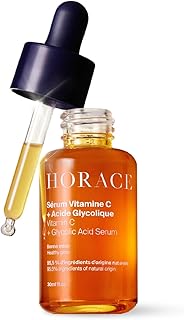
HORACE Vitamin C + Glycolic Acid Face Serum for Men
Check PriceNot every man processes active ingredients the same way. Your skin type dictates whether you can tolerate a daily morning dose or need to buffer it.
Oily and Acne-Prone Skin
If your forehead looks like a mirror by noon, morning application is your best friend. The sebum on your face oxidizes in the presence of air, turning into squalene peroxide, which clogs pores and causes inflammatory acne. Vitamin C is a lipid antioxidant that stops this oxidation process directly. Apply it every single morning, 365 days a year, immediately after a salicylic acid cleanser. This is the most powerful time to stop oil-related oxidation.
Dry or Sensitive Post-Shave Skin
If your neck turns into a red farmer’s tan every time you shave, you cannot jump straight into an acidic serum. For you, the best time to use vitamin c serum for men shifts slightly. You should apply it at night, about 30 minutes before bed, on nights when you did not shave. This avoids the double trauma. If you shave in the morning, use a gentle peptide serum instead, and save the vitamin C for your PM routine. This still gives you the collagen-boosting benefit without the sting. Alternatively, use a vitamin C derivative like Sodium Ascorbyl Phosphate, which is gentler at a neutral pH.
Normal/Combination Skin
You have the most flexibility. Morning is still the gold standard for protection. Stick to a consistent, daily, post-cleansing, pre-coffee morning application. It takes about 21 days to build a visible reservoir, so do not miss days.
Avoid These Common Timing Mistakes
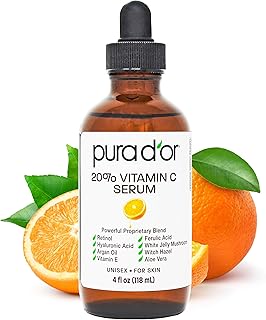
PURA D’OR 20% Vitamin C Facial Serum
Check PriceMany men sabotage their results without realizing it. Watch out for these critical errors.
- Using it with Benzoyl Peroxide: If you apply an acne cream with benzoyl peroxide at the same time, it oxidizes the vitamin C instantly, turning it from a clear liquid to a yellow/orange stain on your face. Separate them by using one in the AM and one in the PM.
- Skipping the Wait Time: Slapping sunscreen directly onto wet vitamin C serum dilutes it and pushes it around unevenly. Let the serum dry for 60 to 90 seconds until it feels slightly tacky.
- Storing the Bottle in the Shower: Heat and humidity degrade L-ascorbic acid faster than anything else. Keep your bottle in a cool, dark cabinet. If it turns dark orange, the timeline no longer matters; the product is dead and will stain your skin.
- Applying Before a Workout: If you apply it right before a heavy gym session, the sweat drips will carry the serum into your eyes, causing stinging, and wash it away before it absorbs. Apply it after your post-gym shower instead.
The Specific Clock: Hour-by-Hour Protection
To truly nail down the best time, look at your circadian rhythm. Cortisol, the stress hormone, peaks in men between 7 AM and 8 AM. This hormone can break down collagen. Applying vitamin C around 7:30 AM, right after you wash your face, counters this cortisol spike. The serum’s half-life on the skin is about 4 hours, so it covers you through the morning commute, which is the highest ozone exposure period. By 12 PM, if you are in an office with blue light, the antioxidant reserve is still working. Reapplication is not usually necessary if you used a high-quality stable formula.
Established Science vs. Bro-Science
There is a lot of bro-science floating around forums suggesting you should just take vitamin C orally. Oral vitamin C is great for your immune system, but it cannot reach the dermis at the concentrations required to brighten spots. Topical timing is critical because your skin’s blood flow is limited.
You are delivering the active directly where it is needed. Another myth is that you should only use it in the winter. Men’s skin is under UV attack year-round, even through car windshields. UVA rays penetrate glass and cause deep collagen damage. The best time is every single morning, regardless of the season.
Frequently Asked Questions (FAQs)
Can I use Vitamin C serum twice a day?
You can, but it is usually overkill for men. Your skin can only absorb a finite amount of L-ascorbic acid before it reaches saturation. Using it twice daily increases the risk of irritation and yellow staining without providing double the benefit. Stick to once a day, in the morning, for the best protection-to-tolerance ratio.
Is it better to apply Vitamin C serum on damp or dry skin?
Slightly damp skin is the ideal surface. This increases permeability and helps spread the product thinner, preventing a heavy, sticky feel. However, if your hands are very wet, you might dilute the pH. Pat your face dry, wait 30 seconds for the residual water to settle, and then apply.
Should men use Vitamin C before or after shaving?
Always after shaving, but not immediately after. You must let the skin settle. Shaving creates microscopic abrasions. Applying an acidic serum directly into those cuts causes a sharp, needle-like sting. Wait 10 minutes post-shave to let the barrier calm down. If you shave at night, you can find a gentle formula for hyperpigmentation that works on a delayed schedule.
How long should I wait before applying moisturizer after Vitamin C serum?
Patience is key. Wait until the serum has transitioned from a wet slip to a slightly tacky, dry finish. This usually takes about 60 to 90 seconds. If you apply moisturizer too early, you dilute the active layer. If you wait too long (5+ minutes), the skin can become tight and the serum can start to oxidize on the surface.
Can I mix Vitamin C serum with my moisturizer to save time?
No. This is a cardinal sin in men’s skincare. Mixing alters the pH of the serum, which is carefully calibrated (usually around 3.5) to penetrate the skin. A moisturizer has a higher pH and will neutralize the acid, rendering it ineffective. You might as well not use it at all if you mix them together.
The Verdict: Your Final Action Plan
The science is clear. The best time to use vitamin c serum for men is in the morning, on clean, slightly damp skin, and always before SPF. This strategy turns your serum into a defensive shield against the environmental damage that ages men faster than genetics. To make this habit stick, do not hide your serum in a drawer.
Place it right next to your coffee maker or your toothbrush. A visible, consistent cue builds a habit. Start your morning routine tomorrow by washing your face with a simple cleanser, patting it dry, and letting the serum sink in for two minutes while you check your phone. Then seal it with hydration.
Do this consistently, and within four weeks, the mirror will show you a brighter, less tired-looking face. Understanding which specific serum formula works for your skin type is the next step in locking in those results. For a deeper look at established scientific data on antioxidants, you can check the clinical guidelines available at the National Library of Medicine’s overview of topical antioxidants.